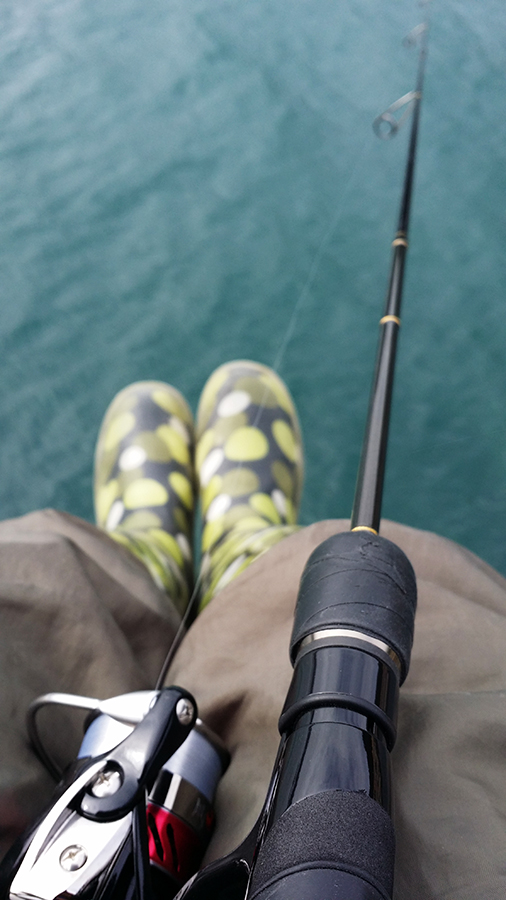
When ajing at a strong-current spot, I use a lighter sinker while the flow is still relatively slow.
At that stage, I rarely let the rig fall completely freely. Instead, I let it sink while lightly touching the line.
I am trying to feel the moment it passes through the layer where the aji are holding: a subtle change in the current, a slight sense that something is different when fish are there, transmitted to my fingers.
More often than not, I feel nothing. Occasionally, though…
There seems to be a name for this technique.
As the current picks up
When the flow gets faster, I use a slightly heavier sinker. Here I make small adjustments to the line tension so the rig rides the current.
The sinker weight depends on the speed of the current and how keen the aji are to feed that day. When they are eager, they will bite even if I gently wind the reel.
Whatever the conditions, the lure still has to reach the depth where the fish are.
When nobody is catching
Even in fast current, it is possible to reach that layer with a lighter sinker. When the fish are reluctant, I find it better to lighten the rig and wait patiently for it to sink into their feeding depth.
This becomes especially important when nobody around me seems to be catching anything. For some reason, this brings the bites.
Which would suggest that a lighter weight gives a more natural movement.
Obvious, really. Prey with a weight attached is… unnatural.
Well, when you put it like that, I suppose it is.
Related: the narrow “tunnel” of feeding depth, and the feeling of heavier water where fish may be holding. These are the author’s observations at this fishing spot, rather than a universal rule.
Read this article on Passionable Fishing (日本語) ↗